
Healing Through Puppy Play
Healing Through Puppy Play
When people hear “puppy play,” they usually assume it is about kink. And yes, it can live in that world. But for me, puppy play became something much bigger than that. It became a nervous system reset. It became a doorway into community. It became a way back to myself.
After my divorce, I found myself asking a question that felt both simple and terrifying. Who am I when I am not someone’s husband?
Twenty years is a long time to build an identity around partnership. When that structure shifts, even in healthy ways, something inside you has to reorganize. I was functioning. I was working. I was traveling constantly. On paper, I looked fine.
Inside, I felt untethered.
Therapy helped me understand what was happening. It gave language to anxiety, attachment activation, and the way my body holds stress. But understanding something intellectually is not the same as feeling safe in your body.
That is where puppy play surprised me.
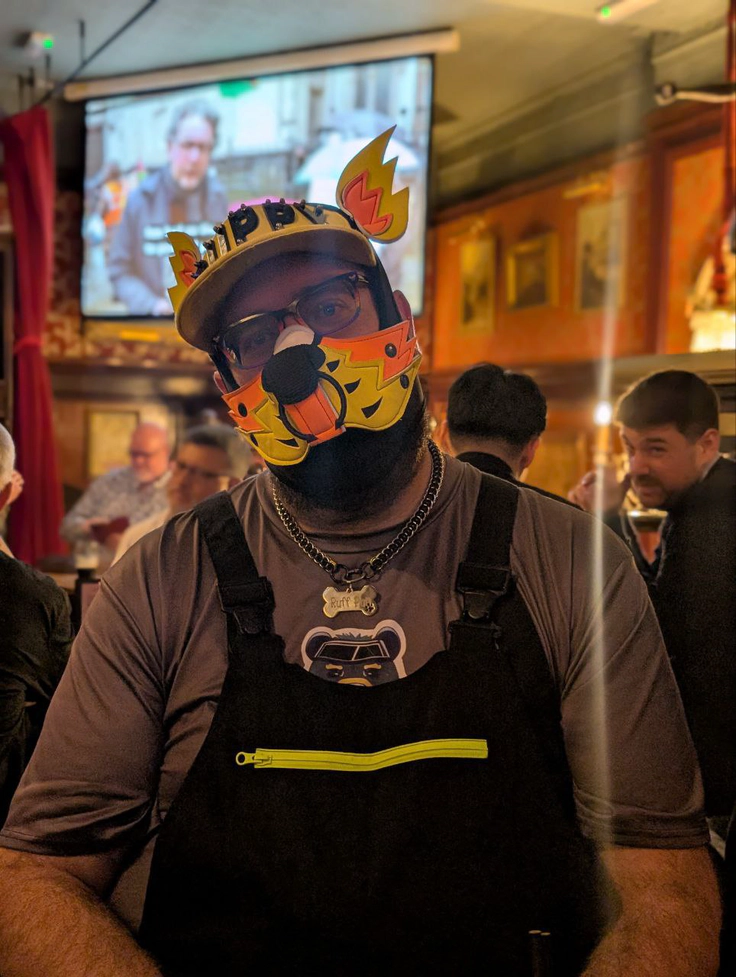
When I drop into pup space, my breathing changes. My shoulders lower. The constant background hum of adult responsibility softens. Play interrupts the spiral. Movement grounds me. Ritual anchors me.
Even something as simple as packing my gear first when I travel is not about planning a scene. It is about taking myself with me. It is a reminder that joy is allowed to come too.
The First Time I Felt It
The first time I really understood this was at my first International Mr. Leather puppy mosh.
I did not know anyone.
My partner and I had barely explored handler and pup dynamics. We were curious but new. That space felt big and loud and full of energy, and I remember wondering if I would feel out of place.
So we volunteered to help set up.
Folding mats. Moving gear. Simple work. That is how we met the Phoenix boys of leather. At the time they were just friendly faces and easy conversation that made a massive room feel smaller. Years later, many of those men are still in my life. They check in. They celebrate wins. They show up.
That night, when the mosh started, something shifted in me.
You could feel the pups’ energy coming off one another. It was playful but not chaotic. It felt electric and safe at the same time. There was a joyful moment where the “mailman” came in delivering packages of toys for the pups to rip open and claim. Watching grown men drop into that kind of uninhibited joy did something to me. It cracked open the idea that adulthood has to be heavy.
But the moment that stays with me was afterward.
When the space softened. When pups leaned into handlers. When friends held each other as everyone came back into themselves. I remember standing there, breathing, feeling more grounded than I had in a long time.
I did not feel exposed. I did not feel performative. I felt connected.
Connected to my partner. Connected to new friends. Connected to my own body.
That was when I realized puppy play was not about escape. It was about belonging.
Belonging in Action
Years later, I saw that same belonging offered to someone else.
This past weekend at London Collared, I noticed a pup sitting alone in the corner. His body language was familiar. Tight shoulders. Overwhelmed eyes. The kind of stillness that sometimes hides an anxiety spike.
Before I could even move, Kuma saw it too.
He went over calmly. No pressure. No spectacle. Just presence. He helped that pup understand something simple and powerful. This is your community. You belong here. There is nothing expected of you. No certain way you have to behave. No performance required.
Then he introduced him to a few other pups. Small bridges. Gentle connections.
By the end of the night, that same pup was smiling.
Kuma and I walked away with a new friend. Pup Kaos.
What struck me was not just that someone felt better. It was how it happened. Not through intensity. Not through dominance. Through reassurance. Through normalization. Through inclusion.
That is healing too.
Integration
Therapy helped me understand my patterns. Puppy play gave me a place to practice new ones.
I practiced allowing care. I practiced being playful without earning it. I practiced sitting with activation instead of fighting it. I practiced the idea that love in parallel is not love diminished.
Over time, that practice became integration.
Montreal taught me freedom. London taught me affirmation. And in Sydney, something finally clicked into place.
On my birthday in Sydney, introducing myself as Ruff felt natural. Not rebellious. Not performative. Just honest.
I was not trying to become a pup. I already was one.
Puppy play did not create that identity. It helped me reclaim it.
Healing, for me, has not looked like shrinking parts of myself to make others comfortable. It has looked like letting those parts breathe. It has looked like recognizing that joy is not frivolous. It is regulation. It is connection. It is resilience.
Healing through puppy play is not about replacing therapy. It is about embodying what therapy teaches. It is about building spaces where someone sitting alone in the corner learns they do not have to earn their place.
Healing does not always look quiet and serious.
Sometimes it looks like laughter echoing across a mosh mat.
Sometimes it looks like chosen family from Phoenix who still text years later.
Sometimes it looks like a pup in London realizing he belongs.
Sometimes it looks like a man in Sydney finally introducing himself without hesitation.
And sometimes it looks like a wagging tail that reminds you that you are allowed to feel safe in your own skin.
If I have learned anything on this journey, it is that healing and leadership are not separate things. The more grounded we become in ourselves, the safer we make the room for someone else. The more secure we feel in our own identity, the more generous we can be with belonging.
For me, puppy play has never been about performance. It has been about presence. And if I can help create spaces where one more pup feels less alone, less anxious, and more at home in their own skin, then that is work worth doing.