
Misconceptions About Pup Play
What people often miss underneath the barking, gear, and chaos.
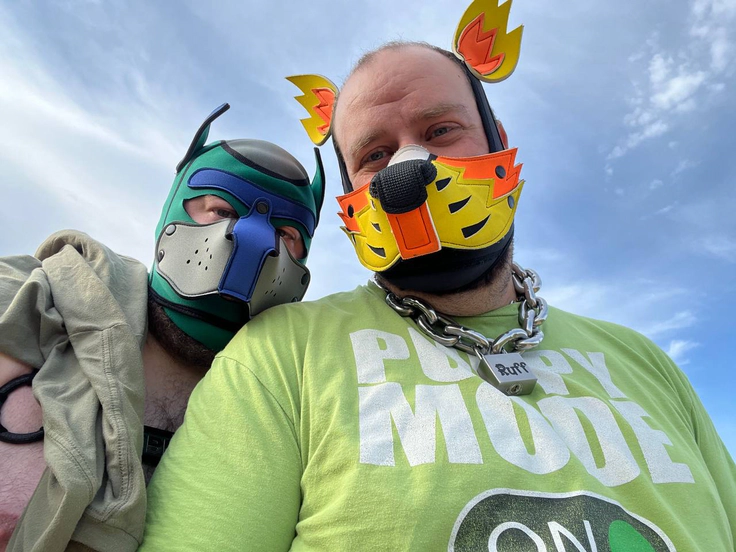
Misconceptions About Pup Play
One of the biggest misconceptions about pup play is that it is only about sex.
For some people, sexuality can absolutely be part of it. But reducing the entire experience to that misses almost everything that makes this community meaningful to so many of us.
Pup play can be playful, energetic, kinky, emotional, grounding, social, healing, creative, affirming, or deeply personal. Sometimes it is about roughhousing in a bar. Sometimes it is about sitting quietly on the floor next to someone you trust after an overwhelming week. Sometimes it is about learning how to exist in your own body again without judgment.
For me, becoming Ruff was never about pretending to be a dog. It was about rediscovering parts of myself I had buried for a very long time.
Puppy headspace gave me access to joy when I struggled to feel it elsewhere. It gave me permission to be social without feeling like I had to perform perfection all the time. More than anything, it helped me reconnect with playfulness, affection, curiosity, and emotional honesty after years of feeling like I always needed to have everything under control.
That became especially clear to me over the span of less than a week between Furry Weekend Atlanta and Pup Camp.
From the outside, a lot of those moments probably looked like stereotypical “chaos puppy” behavior: gear, barking, wrestling, belly rubs, crowded events, loud music, and playful energy everywhere. And honestly, sometimes the chaos is the point.
What people often do not see underneath those moments, though, is the emotional reality behind them. They do not see the conversations happening quietly in hallways, around campfires, or during classes. They do not see newer pups trying to figure out whether they belong. They do not see people slowly lowering their guard after spending years feeling like they had to hide parts of themselves to be accepted.
I felt that especially strongly during Pup Camp.
I had invited Pup Konrad to attend his very first pup event. It was also the first time he had experienced people naturally calling him by his pup name in a social space. Like a lot of newer pups, there were several moments during the weekend where he quietly questioned whether he really fit into the community or belonged there at all.
Honestly, I think most of us know that feeling.
During the pup mosh, I spent some time with him out on the mats helping him settle into headspace for a while instead of staying trapped in his own thoughts. Later that night, while everyone sat around the campfire making hot dogs and s’mores, I started noticing those same walls naturally beginning to come down. His head was bopping to the music, he was laughing more easily, and for the first time all weekend he seemed comfortable simply existing in the moment instead of worrying whether he was “doing it right.”
That is one of the things I love most about healthy pup spaces. They create room for people to exhale.
Earlier that day, there had also been a really thoughtful discussion during Pup Phin’s Alpha class about what brings each of us into headspace and what it actually means to be a good alpha. What struck me most was how different everyone’s answers were. For some people, physical touch was the trigger. For others, it was music, structure, roughhousing, encouragement, or simply feeling emotionally safe enough to let go for a little while.
For me, it was realizing how much of my own headspace comes from trust. From letting my Alpha guide me there and feeling safe enough to surrender control for a while instead of carrying the weight of everything alone.
That emotional safety is the part many people outside the community never see.
A lot of people hear “pup play” and immediately imagine barking, kneeling, masks, or gear. While those things can absolutely be part of it, what surprises many people is how often those playful moments open the door to something deeper: confidence, vulnerability, grounding, connection, or joy.
For some pups, that means learning confidence. For others, it means allowing themselves to be vulnerable for the first time in years. For many, it becomes relief from anxiety, shame, burnout, or the constant pressure to perform adulthood correctly every second of the day.
One thing I wish more people understood is how much communication and intentionality exists inside this community. Healthy pup spaces are built on consent, care, trust, and mutual respect. The best handlers, alphas, trainers, and pups I know are not focused on control for its own sake. They are focused on connection.
That connection looks different for everyone. Some people approach pup play through leather or BDSM traditions. Some approach it through pet play scenes. Some experience it almost entirely as social identity and community. Some people never wear gear at all, while others compete in contests or simply find comfort in spaces where they feel accepted for the first time.
There is no single “correct” way to be a pup.
Another misconception is that pup play is immature or simply escapism. Honestly, I would argue the opposite. Many of the pups I know have done an incredible amount of emotional work on themselves. They have learned communication skills, vulnerability, self-awareness, aftercare, emotional honesty, and boundary setting in ways many people never do. I have watched people build confidence, recover from shame, survive difficult chapters of life, and form chosen families through this community.
That does not mean the community is perfect. No community is. But there is something powerful about spaces where people are allowed to be fully seen without immediately being told they are “too much.”
That is part of why visibility matters to me.
When people meet Ruff, I do not necessarily expect them to understand every detail of pup play. They do not need to. What I hope they understand is that there is a real human being underneath the hood. Someone who found confidence, belonging, healing, friendship, mentorship, and joy through this community after spending a long time believing he needed to shrink parts of himself to be accepted.
Then, somewhere along the way, he discovered that the moment he stopped apologizing for who he was, other people finally felt safe enough to do the same.
That is what #UnapologeticallyPuppy means to me.
Not that we never feel fear or insecurity. Not that we have everything figured out. But that we deserve spaces where authenticity is not something we have to earn first.